Who Owns the Mold
The three standard tooling arrangements in beauty device manufacturing, what each means for your exit, and what belongs in the contract.
November 1, 2026 · 4 min read
Why this question decides your exit
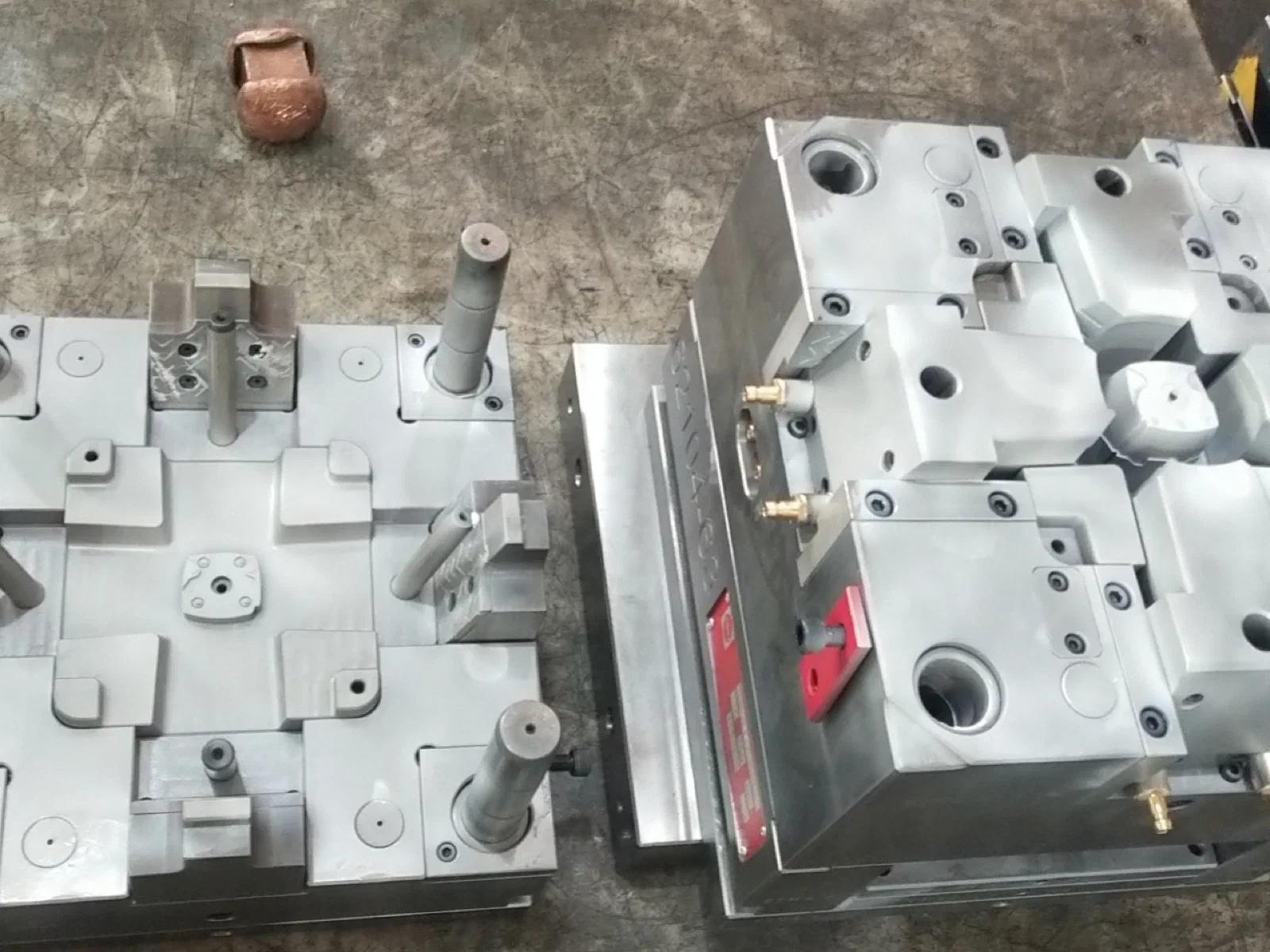
Tooling is the only part of a device project that is a capital asset. Electronics designs can be copied, firmware can be rewritten, packaging can be reprinted. A mould cannot — it is a block of steel shaped specifically for your product, and whoever holds it decides whether you can make that product anywhere else.
In practice, the answer to “who owns the tool” is the answer to “can I leave this supplier”. Buyers spend months negotiating unit price and never ask this, then discover at year two that switching factories means paying for tooling a second time.
The three arrangements
1. Factory owns the tool, cost is inside the unit price
Common for private-label and ODM platforms. You pay nothing up front; the factory amortises the tool across your volume.
- Your exit cost: you leave with nothing. The device stays with the factory.
- Fair when: you are buying a platform, not building a product you own.
- Watch for: the phrase “tooling included” on a quotation with no separate line. You are a customer of a device, not the owner of one.
2. You own the tool, factory holds it
You pay for tooling as a separate line item and the contract states that the tool is your property, held at the factory for your production. This is the most common arrangement for OEM.
- Your exit cost: the cost of physically moving the tool, plus re-qualification at the new molder.
- Watch for: a contract that says you own the tool but not that you may remove it. Ownership without removal rights is a decoration.
3. You own the tool, it is held by a third-party molder
The tool is made and kept at an independent moulding shop, and your assembler buys moulded parts from them.
- Your exit cost: low for the assembly step, still high for the moulding step.
- Fair when: your device needs a specialist molder, or when you want the assembly and the tooling in different hands on purpose.
What “ownership” has to include
Owning the mould is not one right. It is five, and a contract that stops at the first is worth very little:
- Title — the tool is your property, listed as an asset
- Possession at the factory — where it is kept, and who has access
- Removal — your right to take it, on request, without conditions
- Transfer — the right to have another molder use it
- Documentation — 2D and 3D tool drawings, steel certificates, maintenance history, and the mould’s shot count
Point 5 is the one buyers forget. A mould without its drawings is harder to maintain, harder to repair, and harder for a new molder to take over. Ask for the drawing package when the tool is accepted, not when you want to leave.
The “free mold” conversation
A factory offering a free mould is offering to hold your product. That can be a good deal:
- If the volume commitment is one you would have made anyway
- If the contract says what happens to the tool once the commitment is met
- If there is a stated path to buy the tool out later, at a stated price
It is a bad deal when the free tool is the reason you cannot move, and the buy-out price is only discussed after you want to leave.
The honest version of this arrangement is: you pay for the tool through a higher unit price, and the factory keeps title until the volume threshold is reached. Ask for that in those words. If the supplier will not write it, the deal is not what it appears.
Amortisation: paying for tooling across units
Instead of a one-time payment, tooling can be spread across the first N units. This is legitimate and often convenient, but three things should be written down:
- The total tooling amount — a number, not “included”
- The number of units over which it is amortised
- What happens if you order fewer units — the balance owed, and whether the tool transfers to you at that point
Without item 3, a cancelled programme leaves you having paid part of the tool and owning none of it.
What to put in the contract
A tooling clause that actually protects you:
- Identification — each tool listed by part name and number
- Amount — total cost per tool, and the payment schedule tied to tool acceptance
- Acceptance — what constitutes accepted tooling: sample dimensions, cosmetic standard, cycle time, cavity count
- Title and transfer — your property, removable on request, transferable with drawings
- Storage — who pays for storage if production pauses, and for how long
- Buy-out — a stated price if the factory holds title
- Maintenance — who maintains the tool, who pays for repair, and what triggers replacement
- End of relationship — the process and timeline for handover, including a final production run before the tool ships
A practical test
Ask the supplier this, in writing, before you pay for tooling:
“If in two years I want to move this product to another factory, what do I pay, what do I receive, and how long does it take?”
A supplier with a normal arrangement will answer in three sentences. A supplier whose business model depends on holding your product will change the subject or quote a number that makes the question pointless.
Either answer is useful. The second one tells you what the unit price is really buying.
How we handle tooling
Tooling is quoted as a separate line with its own acceptance criteria, and title sits with the buyer. We provide the tool drawing package on acceptance, and if a customer wants to move a tool we hand it over — a relationship held together by a mould is not one worth keeping.