RF vs EMS vs Microcurrent: What Each One Actually Does
Three technologies that get confused in marketing copy. What each does to tissue, what to look for on a spec sheet, and how to choose between them.
August 25, 2026 · 4 min read
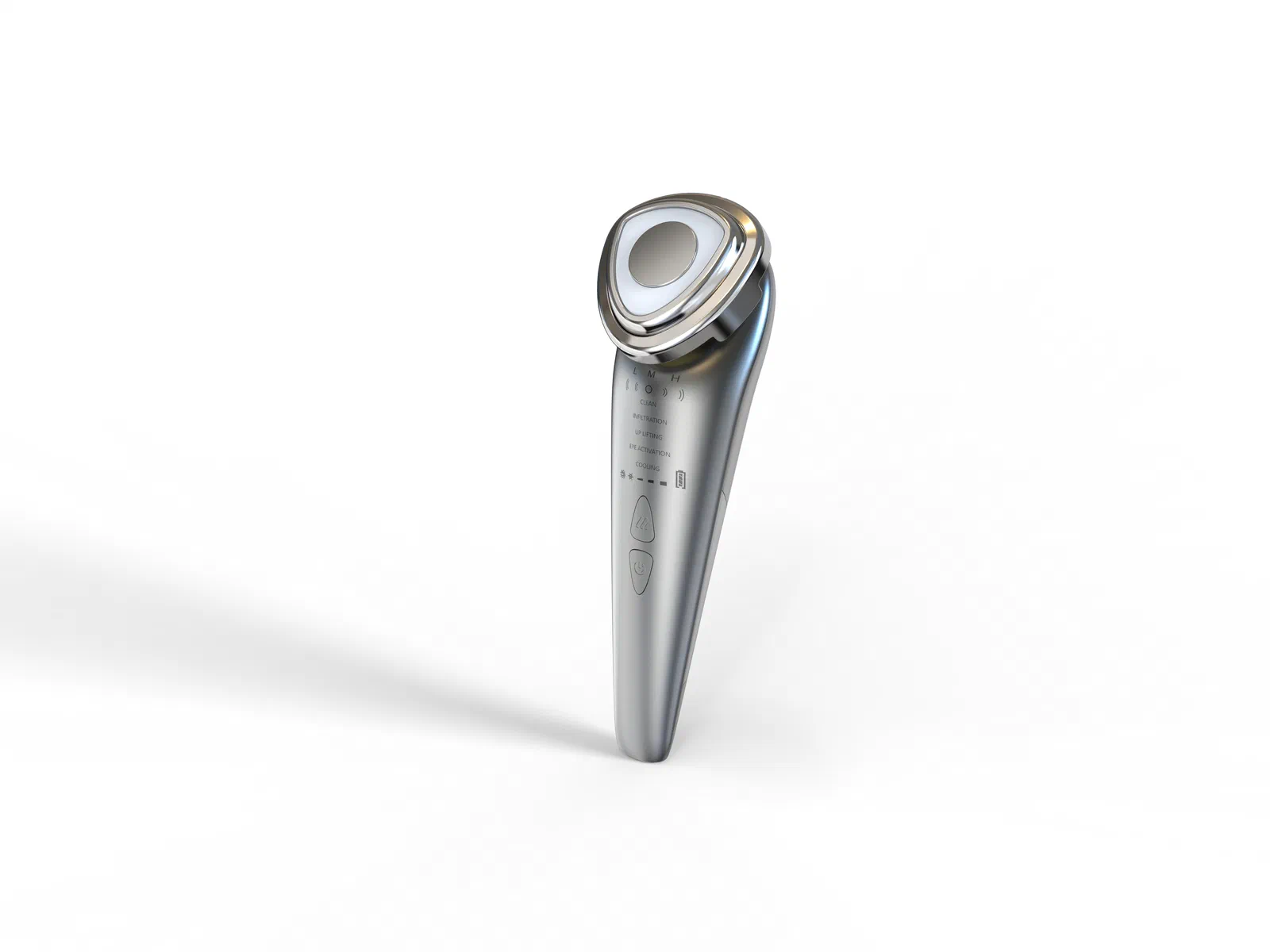
Search for an anti-ageing home device and you will find the same three letters used almost interchangeably: RF, EMS, microcurrent. They are not interchangeable. They act on different tissue, feel completely different in use, and are regulated differently in some markets.
This article separates the three, explains what each is actually good for, and lists what to check on a specification sheet — as opposed to a product page.
RF: heating the dermis
Radio frequency delivers alternating current that heats tissue by resistance. In a facial device the target is the dermis, where heat is used to stimulate a repair response; the surface has to be protected or cooled so the energy reaches depth without burning the epidermis.
What decides whether an RF device works:
- Frequency — lower frequencies penetrate deeper but are harder to control
- Power control — a fixed output is not the same as controlled energy delivery
- Temperature feedback — surface sensing and cut-off is a safety feature, not a marketing feature
- Treatment protocol — energy per area per session
RF is the technology where the gap between a cheap device and a good one is largest, because the electronics and the safety sensing carry the result.
EMS: causing visible muscle contraction
Electrical muscle stimulation uses low-frequency pulses that depolarise motor nerves and produce a visible contraction. You feel it working. That is both the appeal and the limitation: it is easy to demonstrate, and easy to overdo.
What matters on a spec sheet:
- Waveform and frequency range — square, biphasic, burst patterns feel and behave differently
- Intensity steps — the number is less useful than the size of the first step
- Electrode contact quality — inconsistent contact is what causes discomfort
A common failure in cheap EMS devices is a first intensity step that is already strong. Users stop after one session.
Microcurrent: below the sensation threshold
Microcurrent uses currents in the microamp range, far below what causes contraction. It is used for facial contour work and, in combination devices, to support product absorption. You generally do not feel it — which makes it harder to sell on a shelf and easier to overstate in copy.
What matters:
- Current precision — microamps require tighter control than milliamps
- Contact detection — without it the device cannot tell skin from air, and current delivery becomes guesswork
- Session duration guidance — microcurrent protocols depend on time as much as intensity
Side by side
| Feature | RF | EMS | Microcurrent |
|---|---|---|---|
| Acts on | Dermis (heat) | Muscle (contraction) | Tissue (low-level current) |
| User sensation | Warmth | Visible contraction | Usually none |
| Main safety concern | Surface burn | Over-contraction | Skin irritation, contact quality |
| Hard part to engineer | Thermal control | Waveform and step design | Current precision and sensing |
| Typical role | Firming | Contouring | Absorption support, contour |
What to check before you buy
- Ask for the output specification, not the mode count. “5 modes” tells you nothing; the frequency range and intensity steps do.
- Ask how the device protects the surface. For RF specifically, ask what the cut-off condition is.
- Ask whether the intensity curve was tuned or inherited. Many devices reuse a control board and inherit a curve designed for a different housing and electrode geometry.
- Ask which certification the device holds and read which model number the report covers. RF and EMS devices can fall under different standards depending on the market.
How they combine
Combination devices are common — RF with cooling, EMS with microcurrent, or all three plus LED. Combination is legitimate, but it introduces two engineering problems that buyers should ask about: channel isolation (so one modality does not disturb another) and thermal budget (so the housing does not exceed touch limits when several systems run together).
We build RF, EMS and microcurrent platforms as separate families and in combination; the technology pages go deeper on each, and the facial device range covers the models that use them.
How to test a device before you commit
Specifications describe intent. A sample tells you what the device actually does, and three tests separate a good sample from a good story.
The intensity walk. Starting at the lowest level, step up one level at a time and note where you first feel anything and where it becomes uncomfortable. A well-tuned device gives you three or four usable levels in that range. A badly tuned one gives you one.
The drift test. Run the device continuously for ten minutes and check whether the output or the warmth changes as the battery discharges. Devices that feel fine at full charge and weak at half charge are common, and the cause is usually a control loop designed around nominal voltage rather than the real range.
The contact test. Deliberately lift the electrode slightly off the skin. A device with proper contact detection will cut or drop output; one without it will simply keep driving current into a smaller area, which is both uncomfortable and a safety question.
None of this needs laboratory equipment. It needs twenty minutes with a sample and a willingness to notice what changes.
Specifying a device with one or more of these technologies? Send us the requirement — frequency range, target market and certification route — and we will tell you what is achievable at your price point.