High-Pressure Oxygen Infusion Devices: A Buyer's Guide
Pressure, nozzle geometry and cartridge design: what separates a fine, even mist from a sputtering device.
April 3, 2026 · 4 min read
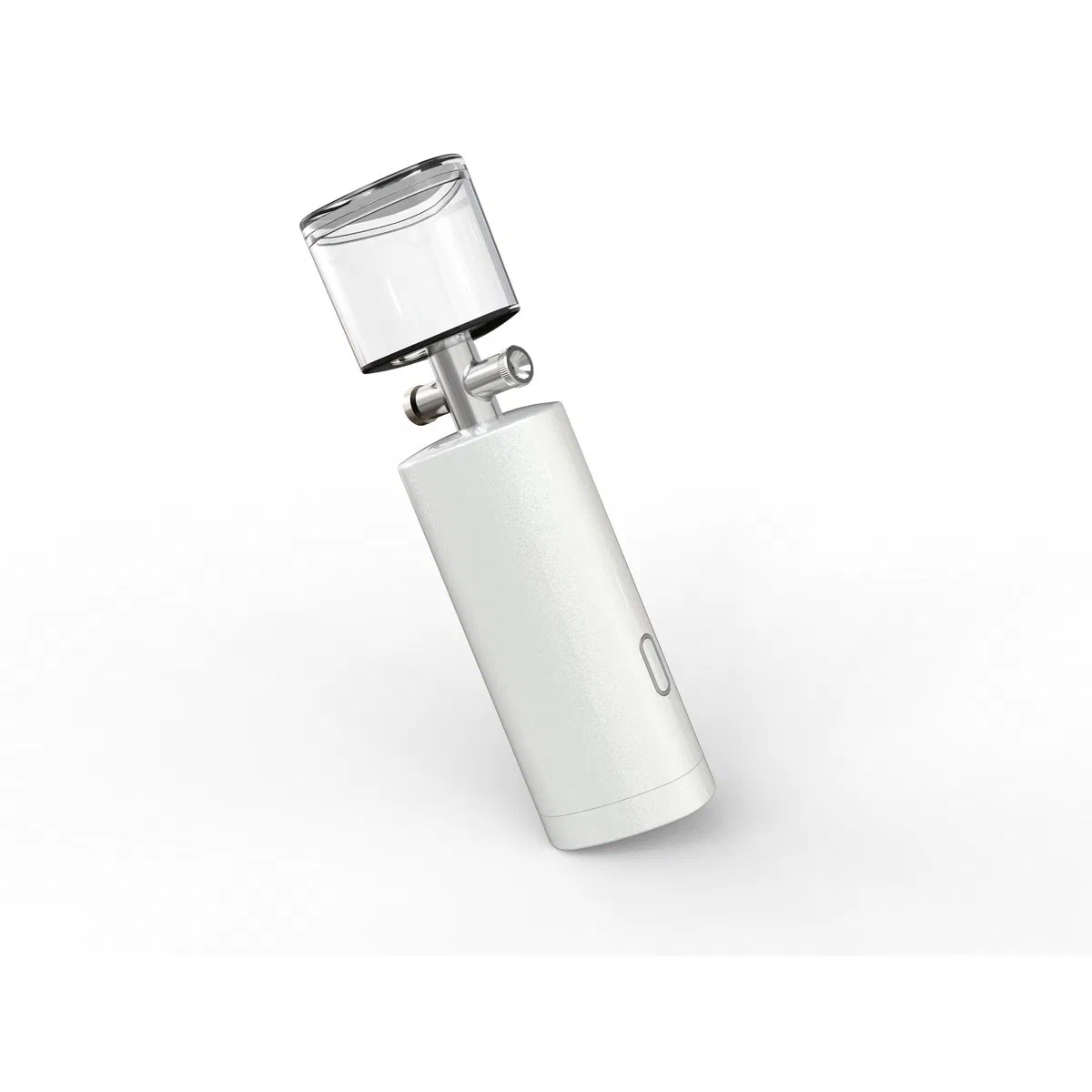
Infusion devices are sold on a sensory promise: a fine mist that feels like it disappears into the skin. That promise is entirely a function of two things — pressure and nozzle geometry — and both are easy to get wrong in a way that is invisible until the product is in a customer’s hands.
This guide covers what to specify, and what to test before committing to a production order.
The three parameters that decide the experience
Pressure. Higher pressure produces a finer mist, up to a point. Beyond that point the spray becomes a jet, which feels unpleasant and delivers fluid less evenly. The useful range for handheld facial devices is modest and should be stated in kPa, not described as “high pressure”.
Nozzle geometry. The orifice diameter and the internal chamfer determine droplet size and spray angle. A 0.25 mm orifice produces a very different mist from a 0.4 mm one, and the difference is visible immediately on a tissue.
Duty cycle. How long the device can run before the pressure drops matters more than peak pressure. A device that sprays at full pressure for 20 seconds and then pulses is a different product from one that holds steady for two minutes.
The cartridge is the engineering problem
Most failures in this category are cartridge failures, not spray failures. Three issues recur:
Starvation. A sealed cartridge that does not vent will pull a vacuum as it empties, and the spray degrades in the last quarter of the fill. The user notices this as “it works worse over time”.
Compatibility. A cartridge designed for one viscosity range will behave differently with a thicker serum. If the brand intends to use its own serum, the fluid path has to be characterised against it.
Hygiene. A nozzle that cannot be removed and cleaned accumulates residue. Users will report this as a smell, and the review will be about hygiene rather than performance.
All three are decided at design stage. A supplier who has not considered venting will not be able to add it later without new tooling.
What to measure before you commit
Three tests, all possible with a sample and a piece of dark paper:
- Spray pattern at full fill. Spray onto paper at a fixed distance and photograph it. You want an even, round pattern with no visible large droplets.
- Spray pattern at near-empty. Repeat with the cartridge almost empty. If the pattern degrades, the venting or the pump design is inadequate.
- Runtime at continuous use. Run the device until it stops and note whether pressure held or faded. Compare with the claimed runtime.
A supplier who can supply their own measurements for these three has done the engineering. A supplier who cannot has assembled a device.
Claims and positioning
Infusion devices sit in a category where the claim matters legally. Delivering a serum is a cosmetic action; delivering oxygen for a therapeutic purpose is not. In most markets the safe framing is cosmetic: hydration, absorption, the sensation of treatment.
The oxygen wording is common in the category and worth handling carefully: describing the device as delivering a mist enriched with oxygen is defensible, describing it as oxygen therapy is not.
Specification checklist
- Operating pressure in kPa, with the measurement point
- Orifice diameter and spray angle
- Droplet size if measured
- Duty cycle and pressure stability over runtime
- Cartridge fill volume, venting approach and viscosity range
- Nozzle cleanability and replacement interval
- Battery, charging and IP rating
- Intended claim and target market
How it fits a product line
An infusion device is usually the most sensory product in a skincare brand’s hardware range — it is the one that feels like a treatment. That makes it a strong hero SKU, provided the spray holds up over the life of the cartridge.
Our high-pressure oxygen infusion platform was developed around cartridge venting and nozzle cleanability specifically because those are what fail in the field.
Maintenance, warranty and the returns equation
Infusion devices generate returns for reasons that are almost all maintenance-related, which means the manual and the serviceable parts matter as much as the spray performance.
Cleaning. A nozzle that cannot be removed will not be cleaned. The manual should describe a routine that a user will actually follow — a thirty-second flush with clean water after each use, not a disassembly procedure.
Wear parts. Nozzles and seals are the parts that degrade. Selling them as a small accessory kit turns a potential return into a repeat purchase, and it gives the user a way to fix a device themselves.
Warranty scope. A warranty that excludes “consumables” without defining which parts are consumables is a warranty that generates disputes. Define the parts and the expected life in the manual.
Water ingress. A bathroom device that is not rated for moisture will fail at the charging port first. Either rate it properly or state clearly that it must be kept dry.
None of this is glamorous, and all of it shows up in the review score — which, for a device sold mostly online, is the number that decides whether the product gets a second order.
Have a serum you want delivered as a mist? Send us the viscosity and fill format and we will tell you which nozzle and pressure range fits before tooling is discussed.