Heated Eyelash Curlers: Temperature, Battery and What Breaks First
Why temperature stability across the battery range decides curl quality, and which components fail first in the field.
April 16, 2026 · 4 min read
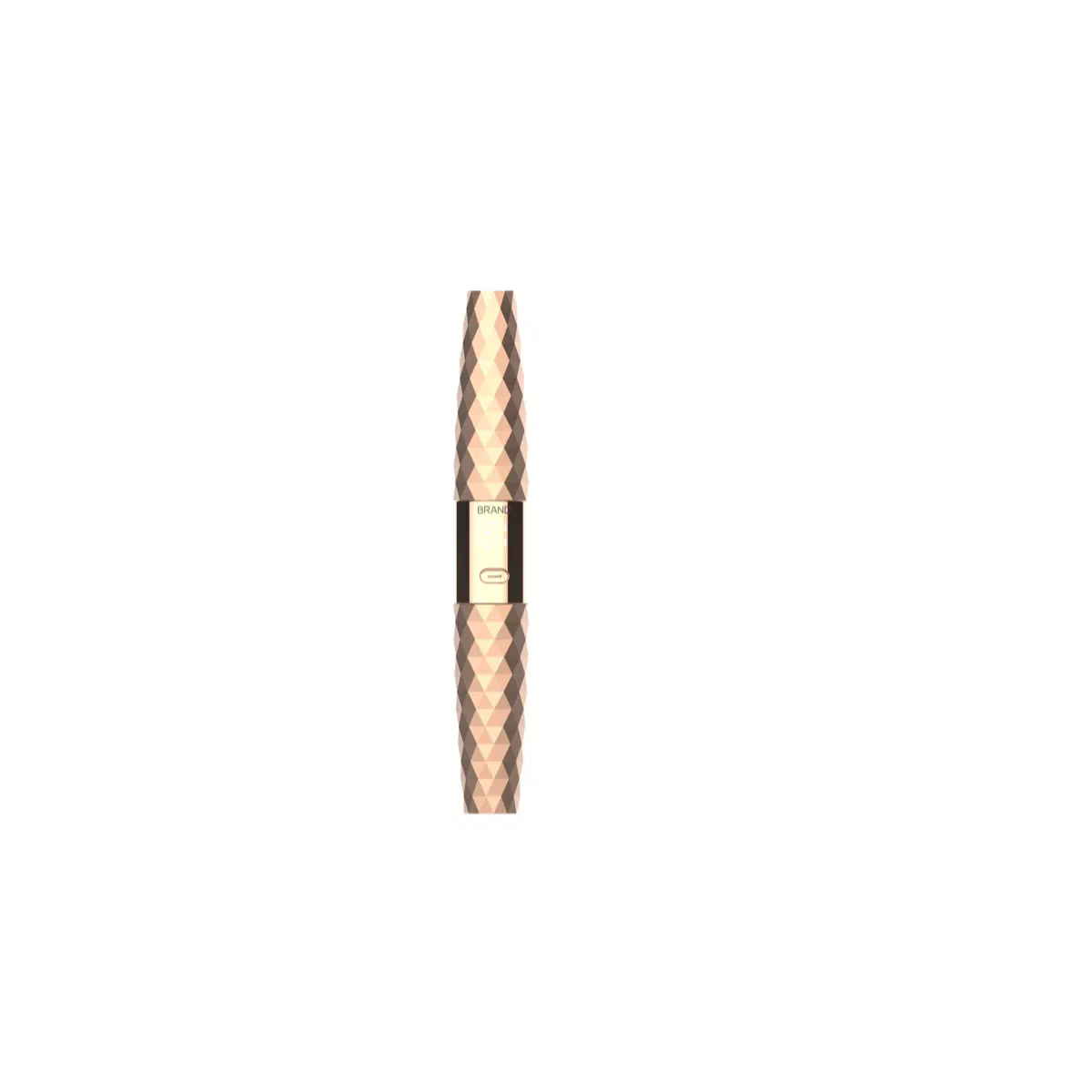
A heated eyelash curler is a simple product with one hard problem: holding a precise temperature at the lash line, on a small battery, for long enough to be useful.
Everything that differentiates a good one from a cheap one follows from how that problem is solved — which is why the specification sheet should be read in a particular order.
Why temperature stability decides the result
Heat sets a curl by temporarily breaking and reforming bonds in the hair. The temperature band that works is narrow: too low and the curl relaxes within minutes, too high and the lashes are damaged.
The engineering difficulty is not reaching the temperature — it is holding it as the battery discharges. A design that regulates against nominal voltage will run hot on a full charge and cool as the cell depletes. The user experiences this as “it works sometimes”, which is the worst kind of product failure because it is hard to describe in a review.
What to ask:
- What is the target temperature at the lash contact surface, with a tolerance?
- Is the sensor measuring the heating element or the contact surface?
- What is the temperature curve from full charge to cut-off?
- Is there a timeout or a cool-down indicator?
The third question is the one that separates designs. A supplier who has measured the curve can answer it in one sentence.
Battery: capacity matters less than behaviour
A larger cell gives longer runtime, but the user notices two other things more:
Charge behaviour near empty. Devices that stay at temperature until the last few minutes, then fade, are better than devices that fade gradually — because the fade is what makes the user distrust the product.
Charging standard. USB-C is now expected. A proprietary cable is a reason to stop using a product that still works.
For a travel product, also confirm whether the device can be stored locked and whether it holds temperature after a long gap between uses.
What breaks first in the field
From a manufacturing point of view, the failure modes are predictable and mostly mechanical:
| Failure | Cause | Design fix |
|---|---|---|
| Hinge loosens | Repeated spring loading, weak pivot | Metal pivot, defined cycle rating |
| Silicone pad compresses | Heat cycling hardens the pad | Higher-temperature silicone, replaceable pad |
| Heating element delaminates | Adhesive choice and thermal expansion | Element mounting redesign |
| Battery degrades | Always charged to full, high idle drain | Charge management, lower standby current |
| Temperature drifts | Sensor moved away from contact point | Sensor placement at the contact surface |
None of these are electronics failures. They are the result of treating a heat product as a mechanical product, which is what it is.
Certifications and claims
A heated curler is a battery-powered heating appliance. Depending on the market it may fall under general electrical safety and EMC requirements, and the battery adds transport documentation — UN38.3 and a safety data sheet for shipping.
On claims, the honest framing is about the curl and its durability. Claims that imply lash growth or conditioning move the product into cosmetic or medical territory and change the regulatory route.
Specification checklist
- Target temperature, tolerance and measurement point
- Temperature curve across the battery range
- Heat-up time and charge time
- Runtime per charge and standby drain
- Hinge cycle rating and pad replacement
- Battery chemistry, capacity and transport documents
- Charging connector
- Target market and the certification route it implies
How it fits a product line
Curling devices are a strong entry SKU: low unit cost, high perceived utility, and a natural companion to a mascara or lash serum line. The engineering risk is concentrated in the hinge and the thermal loop rather than in the electronics.
Both of our current platforms — the diamond-pattern and the V-face curler — were developed around temperature stability first and housing second.
Coating, pads and lash safety
Two components decide whether a curler is safe to use repeatedly, and both are easy to specify badly.
The coating on the heating surface. An uncoated metal surface at curl temperature can grab or scorch lashes. A coating that degrades with heat cycling will flake, and flaking is both a safety and a warranty issue. Ask what the coating is and what cycle count it was tested to.
The pad. Silicone pads harden with repeated heat cycles and compress with use. A replaceable pad is a small cost in the bill of materials and a large benefit in product life — and it creates a natural accessory SKU.
There is also a design decision worth making explicitly: whether the device heats from one side or both. Single-sided heating is easier to certify and gentler; two-sided heating curls faster but leaves less margin for error. The right answer depends on the target user, and it should be decided before the housing is drawn.
Packaging and transport
A battery-powered heating product needs more than a box. Lithium cells require transport documentation — UN38.3 test summary and a safety data sheet — and the packaging has to survive the mode of shipping you intend to use. Retail packaging for a small device is also where a surprising share of the unit cost sits, so it is worth designing alongside the product rather than after it.
Developing a heated lash product? Send us the target temperature and market. If you already have a reference sample, we can measure its temperature curve and tell you what needs to change before tooling.